
Everyday writing needs ink you can trust.
It may not be the flashiest ink in your collection. It may not be the most unusual color. But it should be the ink you can reach for without worrying about how it will behave on the page.
For notes, journaling, planning, school, office work, and daily handwriting, the right fountain pen ink should be readable, comfortable, and dependable.
Choosing everyday ink is about balance. You want personality, but you also want practicality.
Start With Readability
The best everyday fountain pen ink should be easy to read.
That does not mean it has to be boring. Blues, blacks, blue-blacks, browns, greens, purples, and grays can all work for daily writing depending on the shade.
But if the ink is too pale, too bright, or too unusual, it may be harder to use for everyday notes.
For work, school, and planning, readability matters. You want to return to the page later and understand it quickly.
A good everyday ink should make your handwriting clear.
Think About Drying Time
Drying time matters more in daily writing than people expect.
If you are taking notes quickly, turning pages, using a planner, or writing left-handed, slow-drying ink can become frustrating. Smears can make notes messy and harder to read.
Some inks dry faster than others, but paper and nib size also matter.
A broad, wet nib on smooth paper will usually dry more slowly than a fine nib on more absorbent paper.
For everyday use, choose ink that works with your pen and paper combination.
Match Ink to Your Paper
Paper changes everything.
An ink that looks beautiful in one notebook may feather or bleed on cheaper paper. Another ink may dry quickly on office paper but look less rich than expected.
If you write mostly in a planner, test ink there.
If you write letters, test it on stationery.
If you use notebooks for work or school, test it on those pages.
Everyday ink should work where you actually write.

Choose a Color You Will Use Often
A dramatic ink color can be fun, but everyday writing usually needs a color you will not get tired of.
That is why many people keep a reliable blue, black, or blue-black ink in regular rotation. These colors feel appropriate in most situations and are easy to read.
Still, everyday ink does not have to be plain. A deep green, warm brown, rich burgundy, or soft gray can be practical if the color stays readable.
The best everyday color is one that feels personal but still useful.
Consider the Pen and Nib
Ink behaves differently depending on the pen.
A fine nib will usually create a thinner line and may feel more controlled. A broad nib shows more ink color and shading but may use more ink and dry more slowly.
A wet-writing pen can make an ink look darker and richer. A drier pen may make the same ink look lighter.
That does not mean one is better. It means ink, nib, and paper work as a system.
If an ink does not feel right, the issue may not be the ink alone.
Shading, Shimmer, and Everyday Use
Shading inks can be beautiful for everyday writing because they show variation without always feeling too flashy.
Shimmer inks are different. They can look stunning, but they may be better for cards, headings, creative writing, journaling, and special uses rather than every page of daily notes.
For everyday writing, think about how much maintenance you want. Specialty inks may need more attention, especially with fountain pen cleaning.
The question is not only “Does it look good?”
It is also “Will I want to use this every day?”

Keep One Reliable Ink Ready
Many fountain pen users like having one dependable everyday ink always ready.
This becomes the ink for normal notes, planning, drafts, lists, and daily writing. Then more expressive colors can be used for journaling, letters, headings, or special pages.
That simple system gives you both practicality and creativity.
You do not need dozens of inks to enjoy fountain pen writing. One good everyday ink can do a lot.
Explore Private Reserve Ink
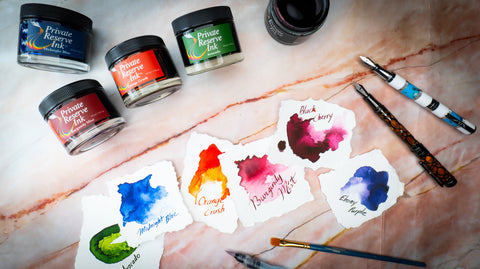
Private Reserve Ink offers colors for everyday writing, journaling, creative work, and personal expression.
If you are exploring colors, start with the shades you can imagine using often. The best ink is the one that makes you want to keep writing.
FAQ
What is the best fountain pen ink for everyday writing?
The best everyday ink is readable, dependable, comfortable to use, and works well with your pen and paper.
What ink color is best for daily notes?
Blue, black, and blue-black are classic choices, but deep greens, browns, burgundy, and gray can also work if they are easy to read.
Does fountain pen ink dry quickly?
Drying time depends on the ink, paper, nib size, and how wet the pen writes.
Can I use shimmer ink every day?
You can, but shimmer ink is often better for special writing, headings, cards, and journaling because it may require more pen cleaning.
Should I test ink before using it in a planner?
Yes. Planner paper can be thin, so testing helps avoid bleeding, feathering, or slow drying.
Final Thought
Everyday ink should make writing easier.
It should be clear, comfortable, and dependable enough to use without thinking too much. The right ink does not have to be boring. It just needs to fit your writing life.
Choose a color you enjoy, test it with your pen and paper, and keep writing.
Comments (0)
There are no comments for this article. Be the first one to leave a message!